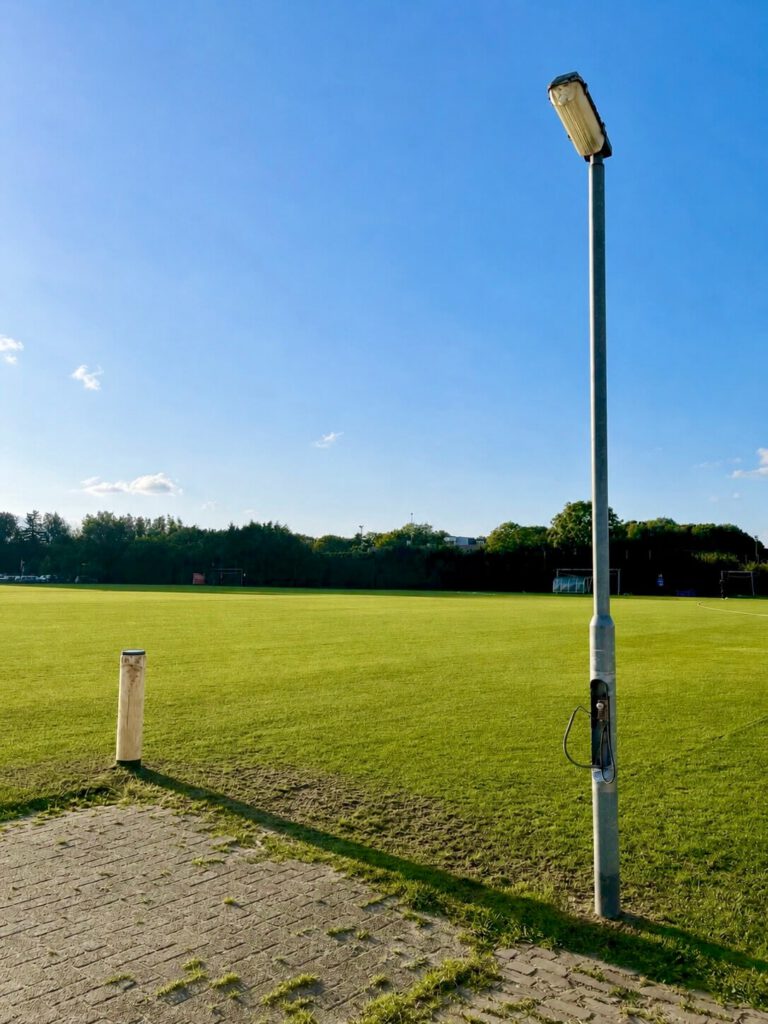
The challenge extends far beyond coastal towns and beach promenades. In some parts of the country, these pressures are already having visible consequences. Compounding the issue, grid congestion has become a growing challenge in
Utrecht and many surrounding regions. This is being driven by familiar changes in everyday life: new housing developments, the rapid rise of electric vehicles and heat pumps, and steadily increasing energy demand. Together, these factors are placing increasing pressure on an electricity grid that was never designed for today’s level of electrification. As a result, development projects are facing delays while waiting for available grid capacity. However, it is worth noting that off-grid lighting for beaches alleviates some of these pressures by operating independently of the electric grid.
The question is becoming increasingly relevant: What happens when the infrastructure we depend on can no longer keep up?
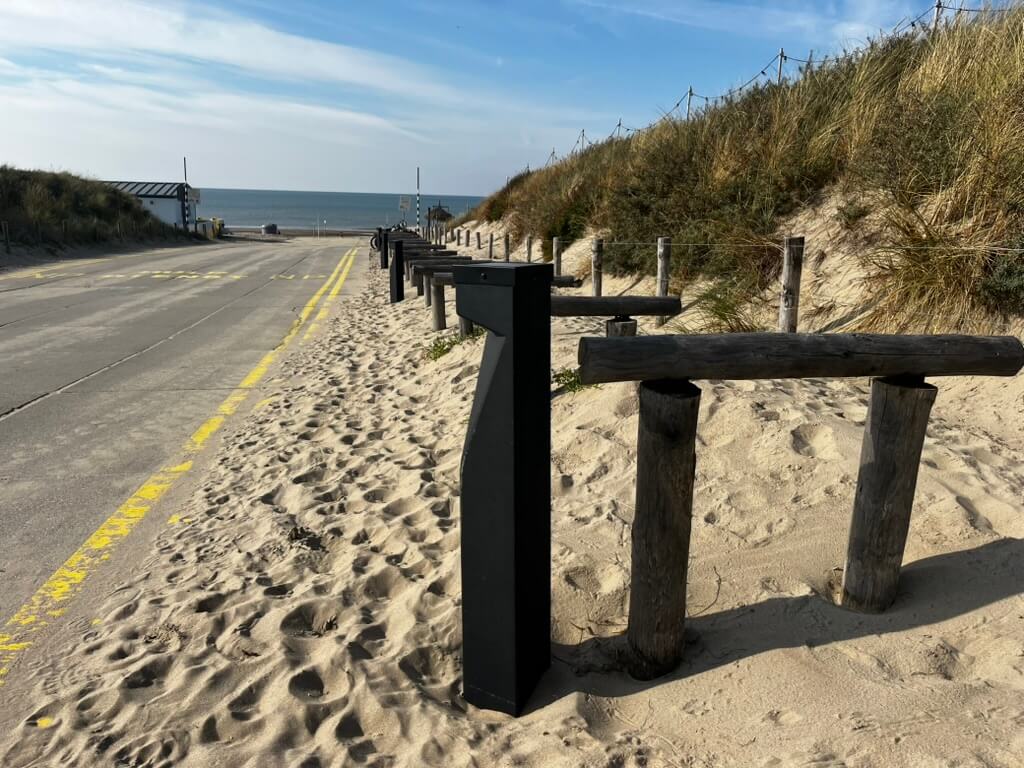
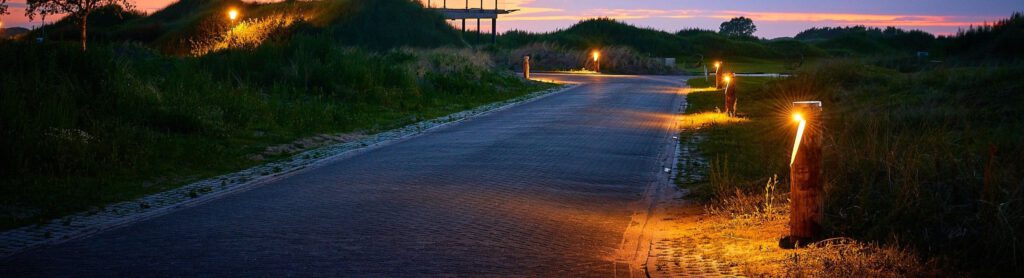
Along the coast, the situation is different. Some time ago, SolarWoodle installed solar-powered lighting in Noordwijk aan Zee, demonstrating how off-grid solutions can provide reliable lighting without relying on grid availability. At first glance, Noordwijk and Utrecht seem like completely different environments. One is a bustling urban area facing grid constraints. The other is a coastal destination known for its beaches, tourism, and open landscapes. Yet both locations share a common challenge: infrastructure must remain reliable despite difficult conditions.
In
Utrecht The challenge is primarily infrastructural, driven by rapid urban growth, electrification, and increasing demand. In contrast, in Noordwijk, these challenges are physical. Strong coastal winds, shifting sand dunes, salty air, and heavy seasonal visitor traffic create an environment where durability is essential. Thousands of visitors can arrive on busy summer days, transforming quiet beach paths into bustling public spaces. In such a scenario, lighting must remain visible, functional, and safe throughout it all. And SolarWoodle has it covered. Because SolarWoodle cares not only about the environment and sustainability, but also about your comfort and safety. Furthermore, off-grid lighting for beaches plays a key role in making these areas accessible and enjoyable regardless of grid limitations.
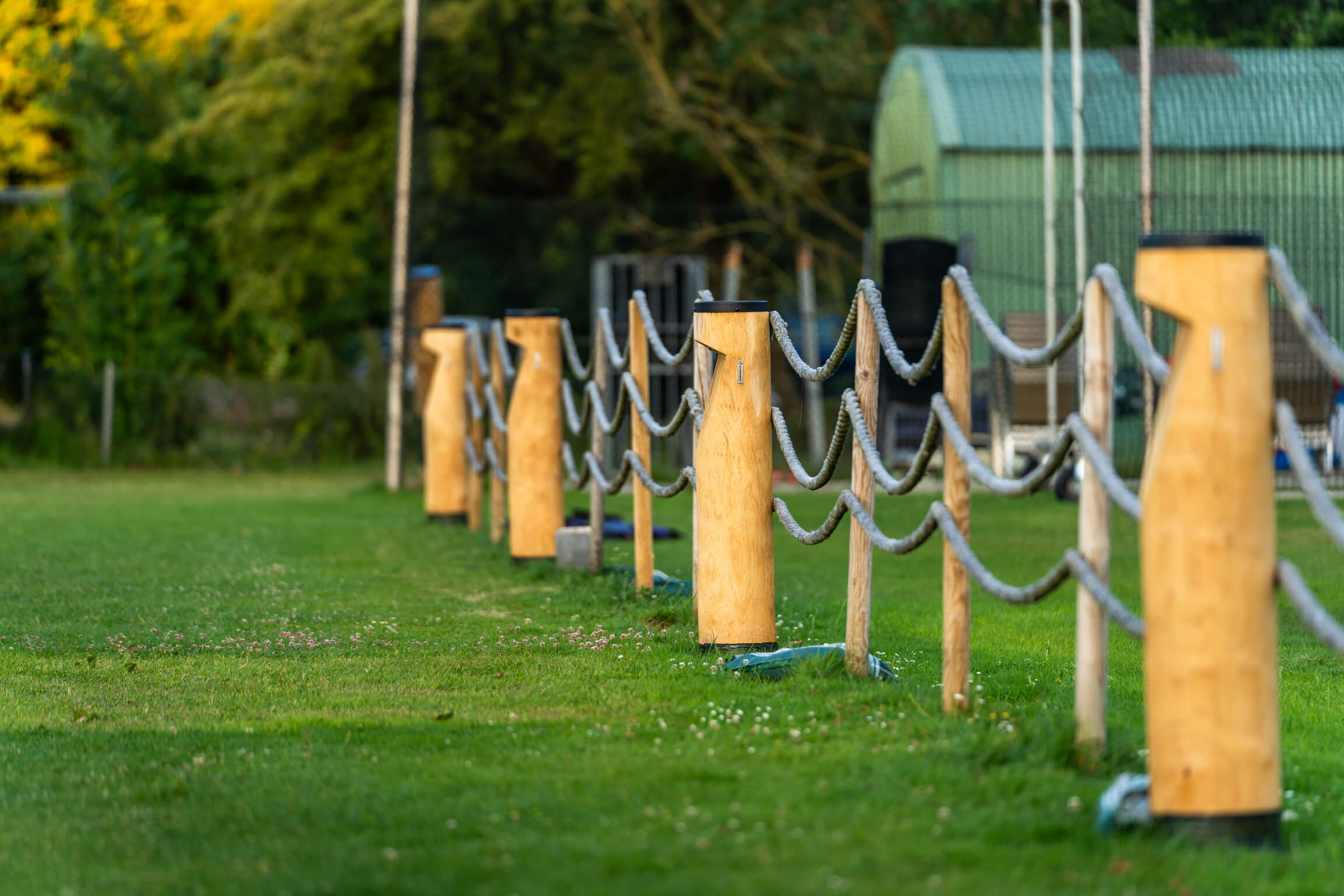
SolarWoodle on the grounds of Maarschalkerweerd Noord –
Utrecht
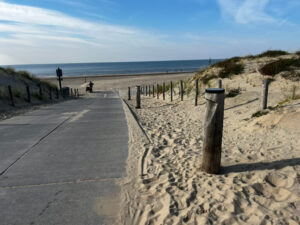
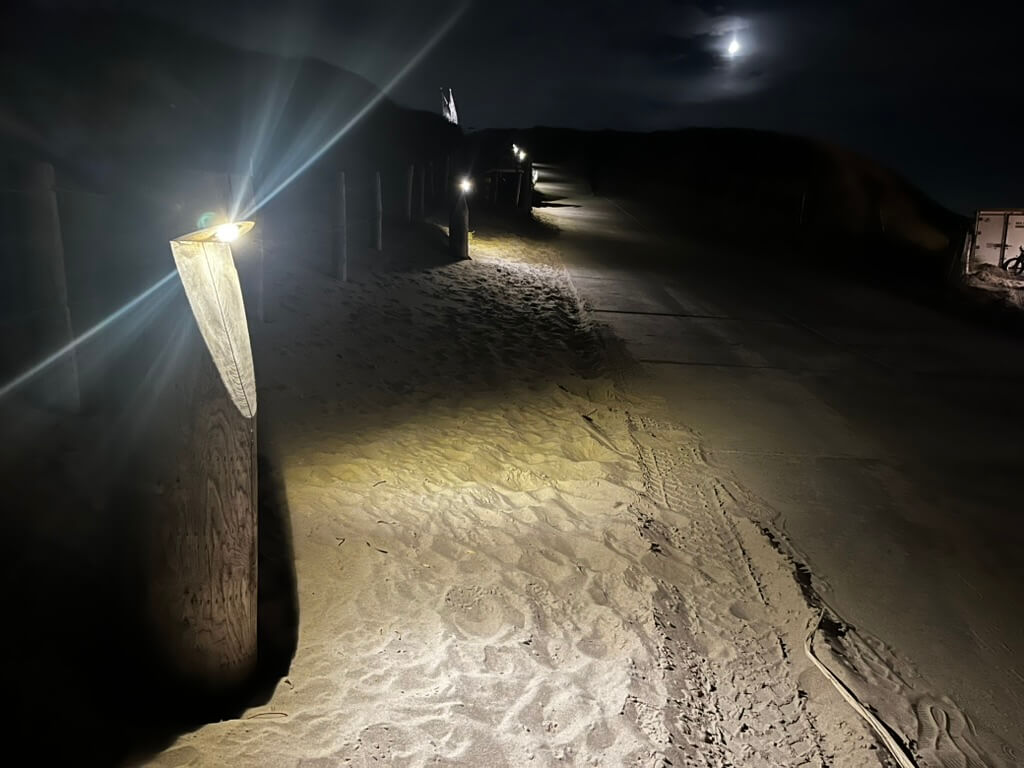
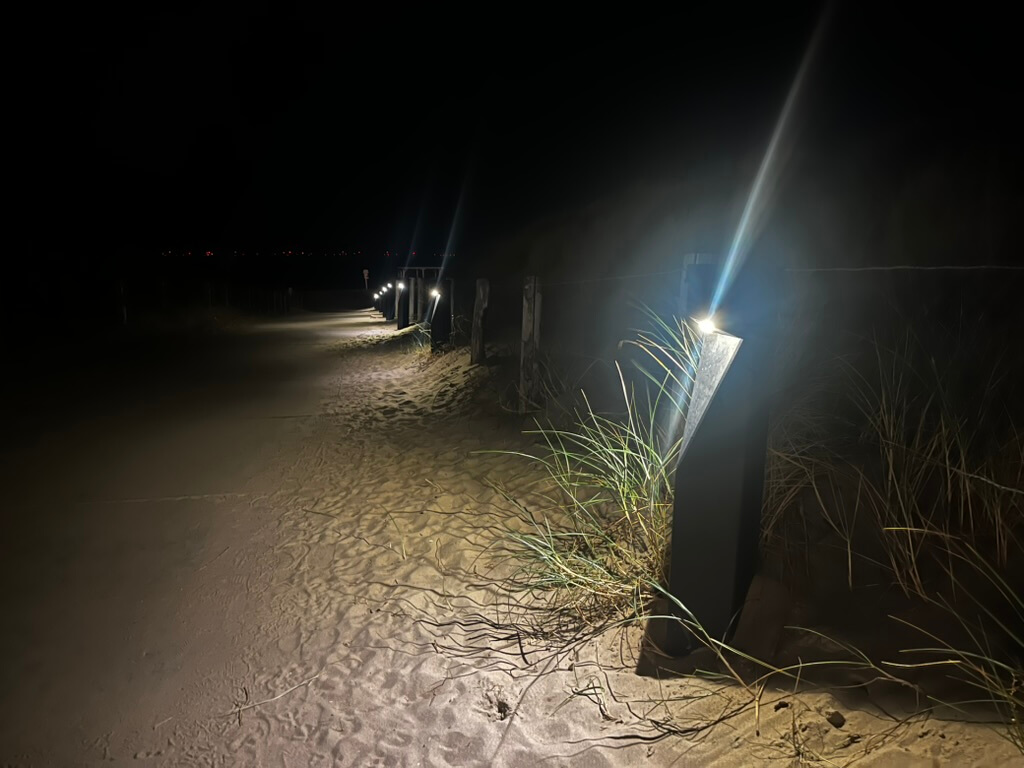
The SolarWoodles installed in Noordwijk are designed with these realities in mind. The Woodles are placed along both sandy areas and concrete pathways, and the lighting operates completely off-grid. No underground cables, no connection requests, and no dependence on an external power supply. Even when the wind blows sand across the landscape, the SolarWoodle design ensures that visibility remains. Approximately forty centimeters of the lighting structure remains above ground level, allowing it to continue serving visitors even when sand accumulates around the base. The wooden structure itself is built for strength and durability. It blends naturally into the beach environment while withstanding harsh weather conditions throughout the year.
Voor bezoekers is het resultaat eenvoudig: een veiligere en comfortabelere ervaring na zonsondergang. Voor gemeenten betekent dit infrastructuur die volledig zelfstandig functioneert. Dat is veiligheid die verder gaat dan alleen verlichting.
Het toepassen van off-grid verlichting op stranden laat duidelijk zien hoe doordachte oplossingen zowel mens als milieu ten goede kunnen komen.
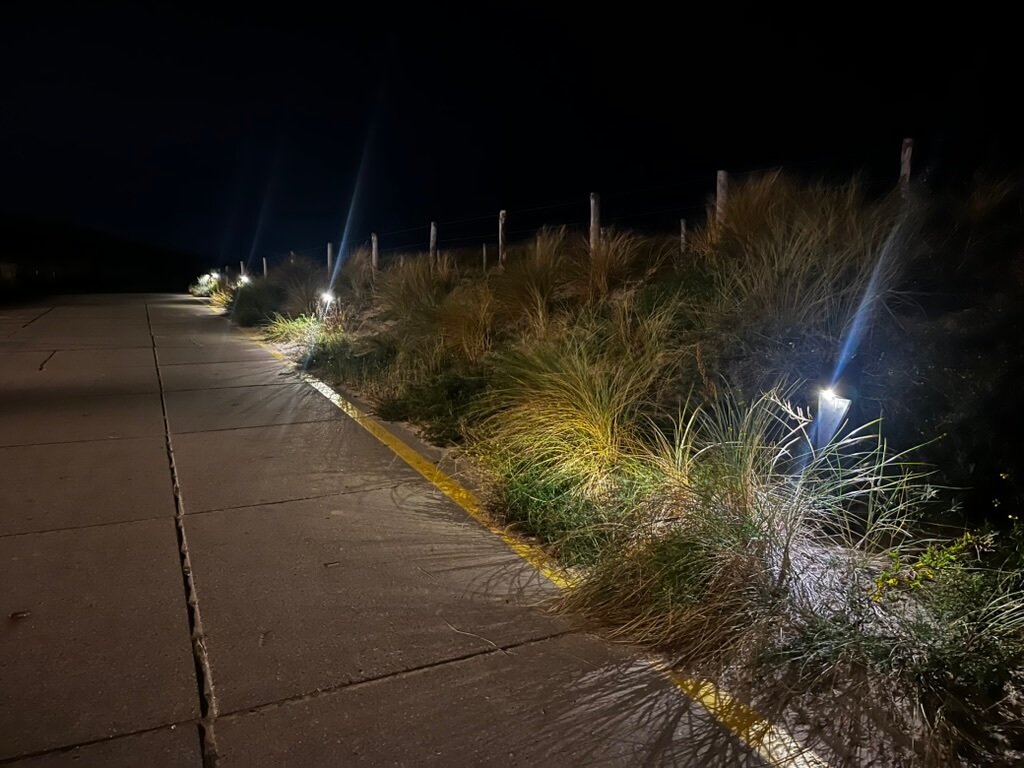
One of the most interesting aspects of the Noordwijk installation is how lighting has become more than just a source of light. Many visitors use the beach paths for evening walks, particularly dog owners who enjoy the quieter hours of the day. The lighting provides reassurance and visibility without disrupting the natural atmosphere of the coastline. Some SolarWoodle units even include QR codes, allowing pet owners to access information. Lighting becomes part of the visitor experience rather than simply a utility.
The story of Noordwijk isn’t really about a beach. It’s about resilience. Long before grid congestion became a national topic of discussion, the project demonstrated the value of infrastructure that can operate independently of centralized systems. Today, that lesson feels increasingly relevant.
As cities like Utrecht face growing pressure on the electricity grid, the ability to deploy infrastructure without requiring additional grid capacity becomes more valuable. Public lighting, pathways,
parks, temporary developments, and public spaces do not always need to wait for a network connection before moving forward. Sometimes the smartest solution is the one that stands on its own. Looking ahead, people often discuss grid congestion as an energy problem. But it is also an infrastructure challenge, a planning challenge, and, increasingly, a public space challenge. The experience in Noordwijk shows that independence can be practical, reliable, and beautiful all at once.
While Utrecht is looking for ways to continue growing within the constraints of a limited grid, examples like our SolarWoodle project in Noordwijk remind us that progress isn't always about adding more connections. Sometimes it's about designing systems that don't need one. At
SolarWoodle, That belief has guided us from the very beginning: infrastructure should serve people wherever they are, regardless of the limitations they face. From the beaches of Noordwijk to the cities of tomorrow, independence is no longer just an advantage. It is becoming a necessity.