Ecological lighting from Dutch soil sets new standard
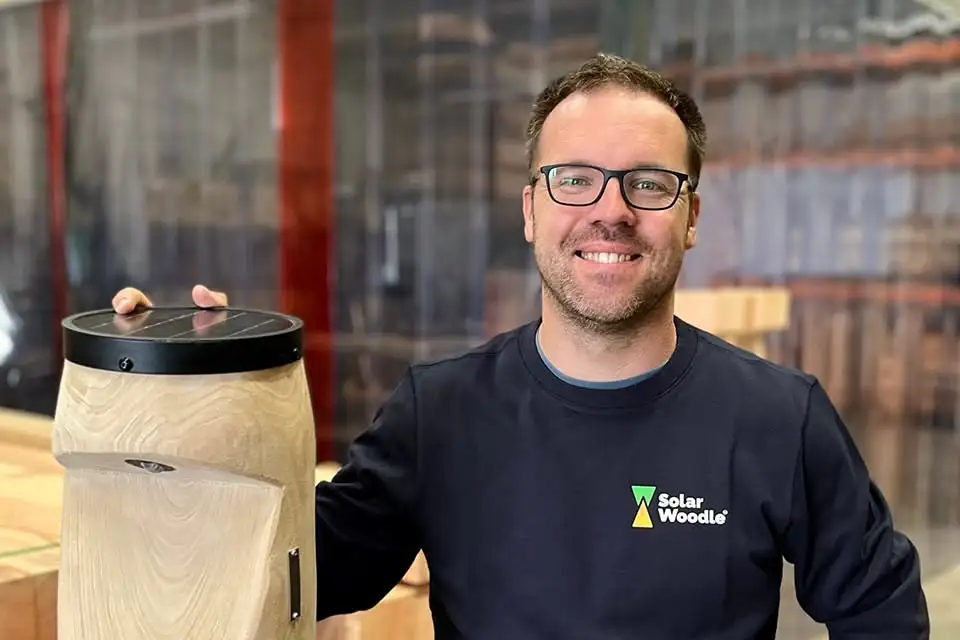
For a lighting manufacturer, it seems contradictory to want to preserve darkness. But for Bernard Wesseling, owner of SolarWoodle, that is precisely the essence. While our densely populated country lights up like a Christmas tree at night, SolarWoodle strives for lighting with minimal impact on the natural environment. "It may sound a little strange for a lighting expert to say that the lights should be turned off, but that is the message we are conveying."
Dutch soil
SolarWoodle's ecological lighting is based on three pillars: people, nature, and technology. Except for the solar panel, all components of the lighting are developed locally. All the technology is Dutch-made, which explains its high quality. "It may be a little more expensive, but a lamp also lasts longer. So, at the end of the day, you save money." The pillar of nature is reflected in the certified wood used to make the lighting. This wood comes from local suppliers. Every component of the lighting is easy to replace and can be repaired by the customer if necessary. Finally, people stand for good personal relationships with customers, suppliers, and employees, in which the company invests heavily. "Ultimately, it's the relationship that lasts the longest," says Bernard, "not the price. When you buy our products, you get our team with them."
To make the lamps circular, SolarWoodle has set up a "second chance" line, in which refurbished products are offered again. "The great thing is that we hardly ever have any returns because our products are so well designed. But when we do, we always see if we can donate them to foundations or charities." The company recently started carrying out part of its production in its own factory to make the production process not only more sustainable but also more efficient. "This also opens the door for customers such as landscapers and hotel owners to come and see our products. They are very welcome to visit our factory."
Light pollution
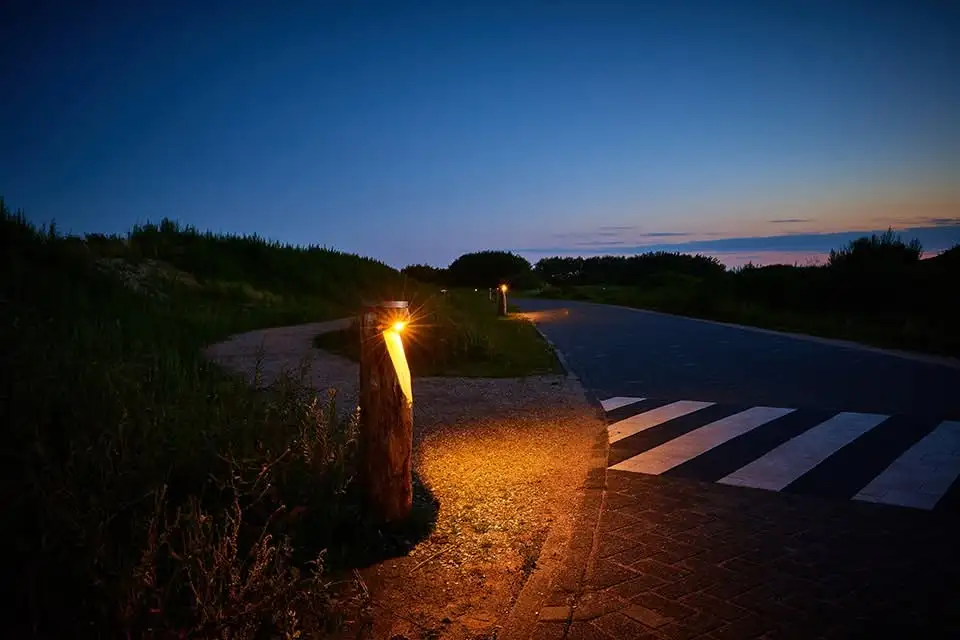
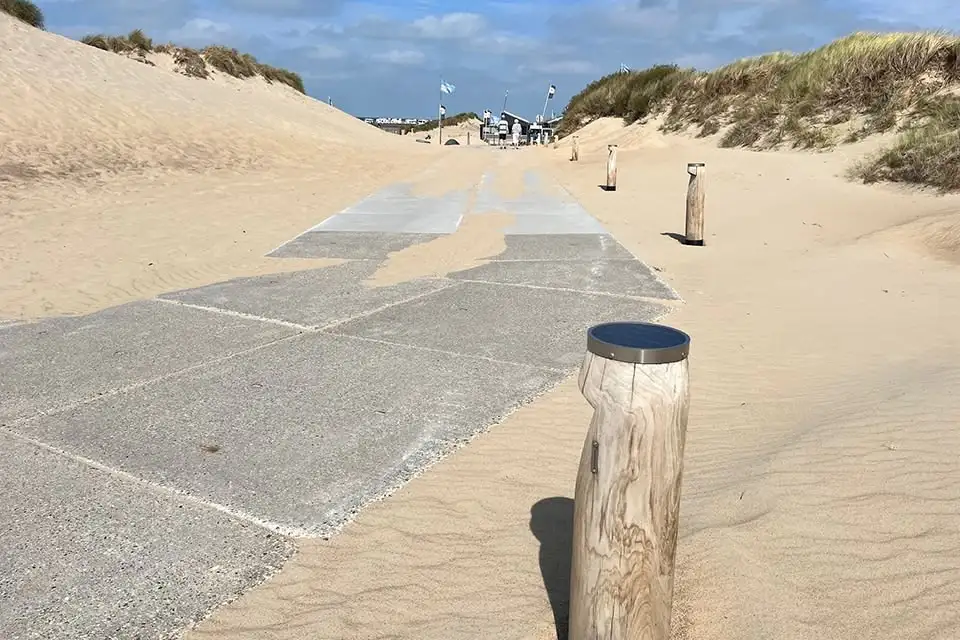
Another aspect that touches on the pillar of nature is the issue of light pollution. In the SolarWoodle design, lighting is used as effectively as possible to minimize damage to nature. Much lighting not only shines on streets or paths, but also unnecessarily illuminates the surrounding nature. SolarWoodle's lighting is designed in such a way that light only shines where it is intended. "But even with different colors and light intensities, we can limit the impact on flora and fauna as much as possible. This allows us to offer customized lighting solutions for every environment."
SolarWoodle recently expanded its range with sensors that enable lighting to respond to movement. "This means that lighting in nature reserves can be switched off after midnight in accordance with regulations, unless someone passes by." This not only minimizes light pollution, but also energy consumption.
“Our starting point is always: what is the minimum amount of light you need to get the job done? So, as a lighting manufacturer, I am actually bringing darkness. The great thing is that this means it is no longer a given that everything has to be lit up 100%.”
NL Greenlabel sustainability passport
Thanks to these developments, SolarWoodle has achieved the highest label in the NL Greenlabel sustainability passport: NL Productlabel score A. This passport evaluates products on various aspects of ecological and sustainable value. "One of the major advantages of our lighting is that no infrastructure is required," says Bernard. Because it is a standalone product, installation only requires a hole in the ground, which means minimal disruption to the environment. "You don't have to plow the ground for cables to install the lighting." The packaging is also sustainable, as the lamps are packed in cardboard, leaving almost no residual waste.
With this solar lighting and high-quality guarantee, SolarWoodle seems to have set a new standard. "We are the only ones in the world who can guarantee that our lamps will burn for at least 10 hours a day, even between Christmas and New Year's Eve, regardless of weather conditions," says Bernard, "only when it snows can we not guarantee that." He sees a bright future for standalone solar-powered lighting: "We are facing all kinds of electricity problems, and although lighting accounts for only a small part of energy consumption, every saving counts. We are not done with outdoor lighting yet—there is still so much to do!"